
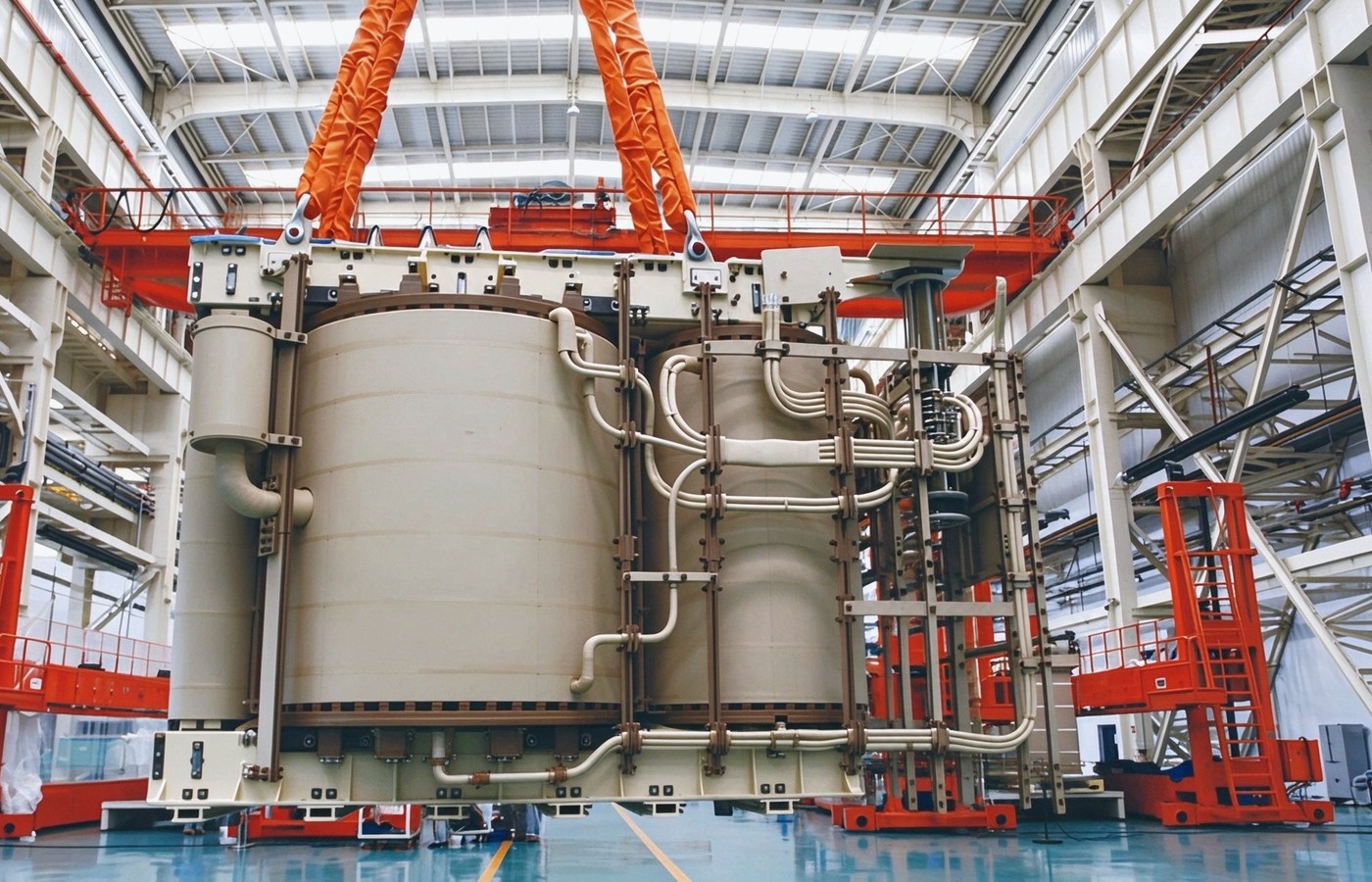
Engineering approach
Lifetime-Matched Engineering — Configuring Every Transformer to Support Longer-Term, More Predictable Project Returns.
Lifetime-Matched Engineering uses the project's target operating life as a design horizon. It brings thermal ageing, harmonics, cyclic loading and extreme environmental conditions into early design decisions, then prioritizes configuration according to the project's load profile, environment, grid conditions and maintenance requirements.
Successful commissioning is a starting point, not an end point. We create a traceable chain from the design basis through manufacturing and testing to delivery documentation.
Appropriate up-front investment is directed to the factors that materially influence losses, sustained loading capability, operational reliability, and maintenance and fault-recovery risk. This gives owners a more defensible basis for managing downtime, major-overhaul and replacement risks over the asset's operating life.
The gap
Purchase decisions optimise for capital cost, delivery and a nameplate that meets the specification. Operating decisions optimise for availability, loss cost and avoiding an unplanned outage. The costs that decide whether a transformer is worth what you paid for it are incurred in the second set, but locked in by the first.
What it means in practice
- Thermal design against the real duty cycle, not a nominal continuous rating.
- Loss evaluation priced over the asset life, not the purchase order.
- Insulation and cooling margins sized for the site, not the standard reference conditions.
- Test evidence that supports a 25-year claim, not just a commissioning check.
- Documentation in English that a future owner's engineer can actually use.
Why a Chinese manufacturer can do this
China has built more renewable capacity, faster, across a wider range of conditions than any other market — desert heat, plateau altitude, coastal salt, deep cold. Those conditions are not laboratory cases for us; they are the sites our transformers already operate on. That experience is the input to the design, and it is why a specification written for a European reference climate often undersizes the problem.
What we need from you
Site ambient temperature range, altitude and pollution level. The inverter or PCS model, so we can size against the real harmonic spectrum. Your grid code and any utility prequalification. And the delivery date your construction schedule depends on.
The evidence behind the claim
Two impulse generator systems (1200 kV and 4800 kV) covering 10–500 kV. Partial discharge background of ≤1 pC at our dry-type plant and ≤10 pC at our oil-immersed plant. A CNAS-accredited laboratory (L5393). And seventy years of continuous transformer manufacturing since 1955.